Elon Musk delivered one of his most striking predictions yet at the World Economic Forum in Davos, warning that humanoid robots could eventually outnumber humans in the global economy and fundamentally reshape how societies function.
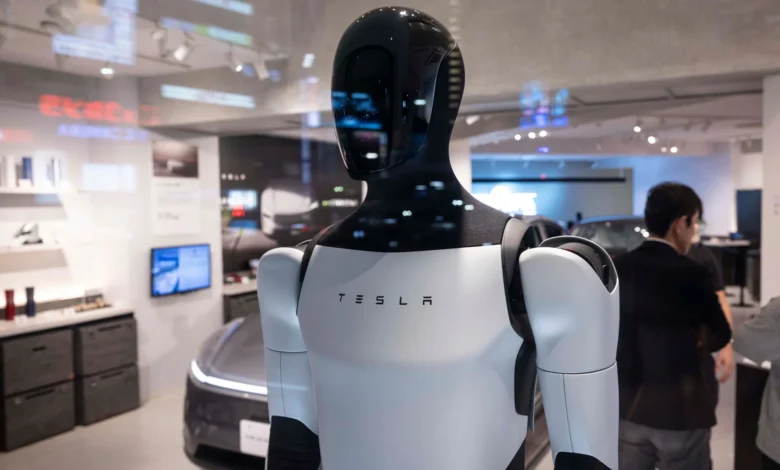
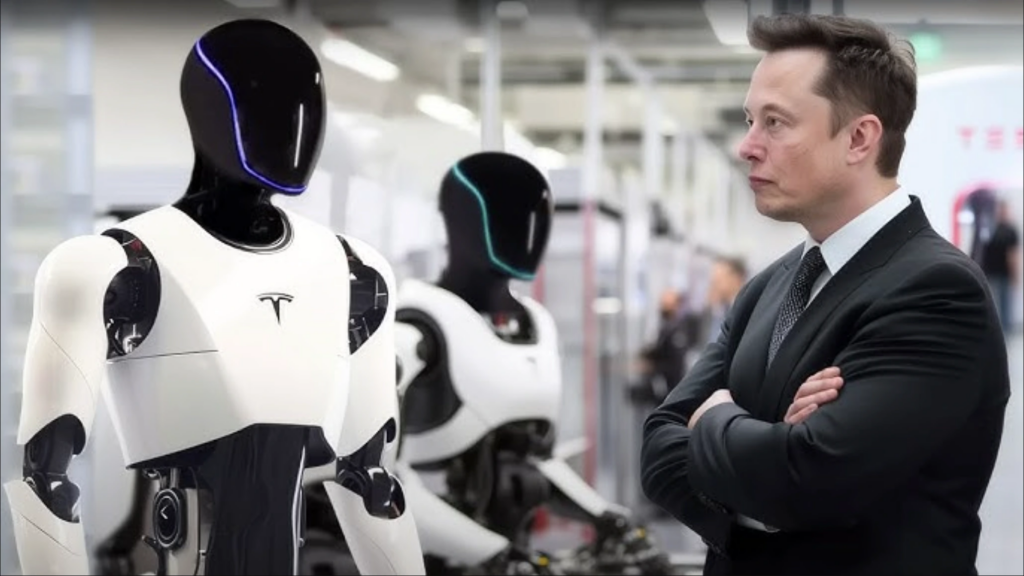
Speaking during a panel discussion on artificial intelligence and automation, the Tesla and SpaceX CEO said rapid advances in robotics — particularly Tesla’s Optimus humanoid robot — are accelerating the world toward what he described as an era of “AI-powered abundance.” Musk suggested that commercial sales of Optimus could begin as early as next year, marking a pivotal shift from experimental robotics to large-scale deployment.
“If you have intelligent humanoid robots that can perform physical work at scale,” Musk said, “the constraints on productivity largely disappear.”
From Cars to Cognitive Labor
Musk emphasized that Optimus is designed to handle repetitive, dangerous, and physically demanding tasks across manufacturing, logistics, and eventually household settings. If successful, the robot could dramatically reduce labor shortages while increasing output across multiple industries.
The implications extend well beyond Tesla’s core automotive business. Musk suggested that the company’s long-term value may be driven less by electric vehicles and more by its leadership in artificial intelligence, robotics, and autonomous systems.
“In the future, it may not make sense to think of Tesla primarily as a car company,” he said, pointing instead to its growing role as a technology and robotics platform.
A Disruption of Work — and Wealth
Musk’s comments reignited debate at Davos over the future of employment and economic inequality. While robots capable of replacing human labor could unlock unprecedented productivity, they also raise concerns about job displacement, income distribution, and social stability.
According to Musk, the challenge will not be scarcity of goods, but how societies adapt to a world where traditional labor is no longer the primary driver of income. He reiterated his long-standing view that new economic models — including universal basic income — may become necessary as automation accelerates.
Faster Than Expected
What set Musk’s remarks apart from previous forecasts was his insistence on speed. He warned that the transition could arrive far sooner than governments, businesses, and workers are prepared for.
“This is not something that happens in 50 years,” Musk said. “It’s happening on a very short timeline.”
Why It Matters
If humanoid robots like Optimus achieve widespread adoption, the impact could rival — or exceed — that of the industrial revolution. Entire sectors may be transformed, wealth creation could shift dramatically, and the definition of work itself may need to be reimagined.
As global leaders gathered in Davos to discuss economic resilience and technological risk, Musk’s message was clear: the age of human-dominated labor may be approaching a turning point — and the world may be underestimating how close it is.