The engine turned over one last time before the stranger drove Tim’s car down the driveway. Tim stood in the exhaust heat, holding a stack of cash that didn’t feel like a reward, but a ransom. He wasn’t selling the car for a down payment or an upgrade; he was selling his own mobility so his brother, Josh, could finally have his.
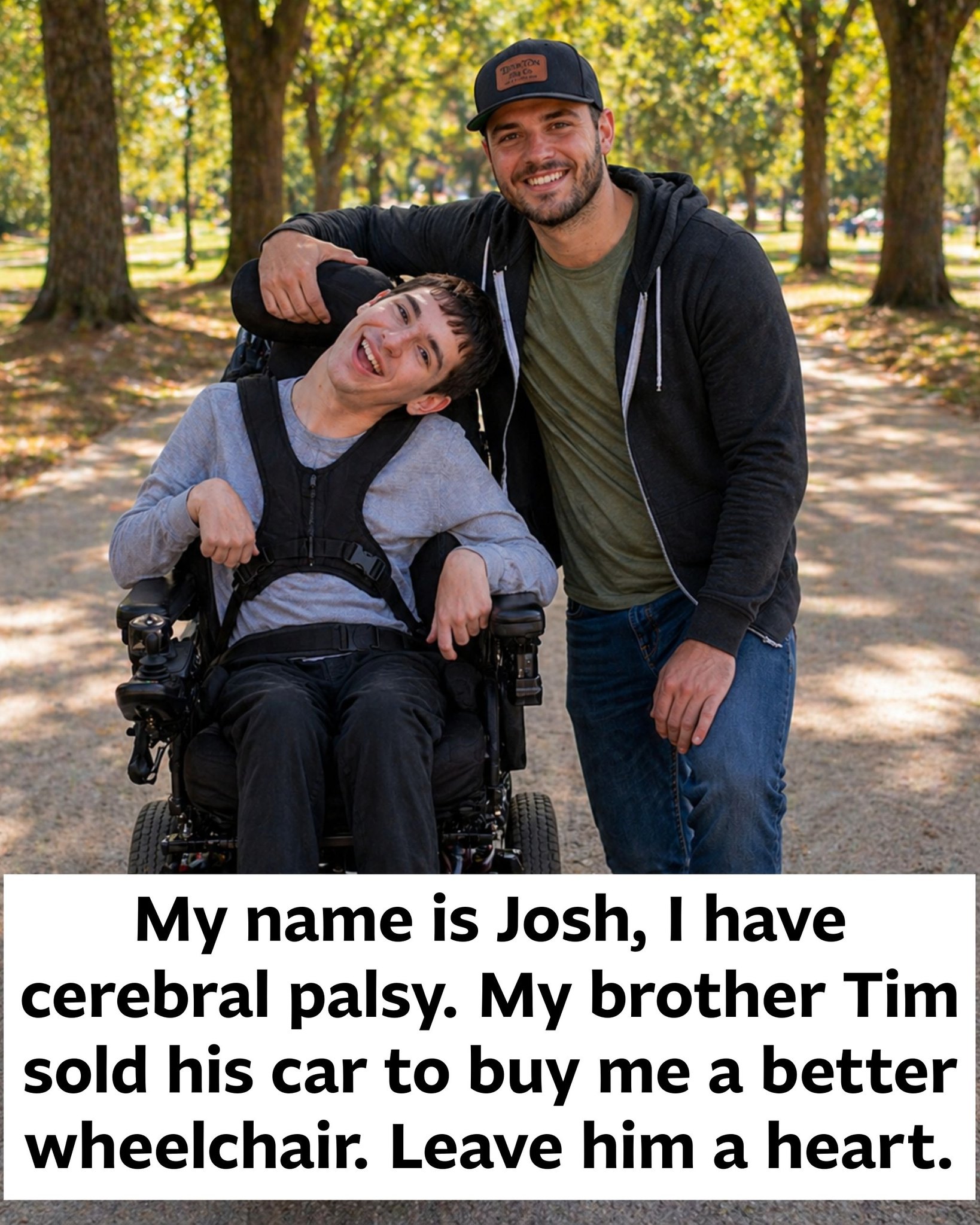
Josh lives with cerebral palsy, a condition that demands specialized equipment that the modern world prices like luxury jewelry. For months, Josh struggled with a chair that had become more of a cage than a tool for freedom. It was heavy, outdated, and failing.
The family did what they were supposed to do. They filled out the forms, waited on the hold lines, and appealed the denials from insurance providers who deemed ‘adequate’ what Josh knew was impossible. The system looked at Josh’s need for movement and saw a line item to be minimized.
When the final ‘no’ arrived in the mail, Tim didn’t argue with a claims adjuster. He didn’t post a GoFundMe or wait for a miracle. He walked into the garage and looked at the only asset he owned that carried enough value to bridge the gap between Josh and the world outside.
The car was Tim’s way to work, his independence, and his freedom. To the insurance company, a wheelchair is a piece of durable medical equipment. To Tim, it was the price of his brother’s dignity. He chose the dignity.
Now, Josh moves through the world with a new ease, but every time he looks at the empty spot in the driveway, he sees the cost of his autonomy. He feels the weight of a sacrifice that shouldn’t have been necessary in the wealthiest nation on earth.
Tim is being called a hero. People tag their friends and leave heart emojis, celebrating a young man who gave up his only means of transport for his brother. They focus on the ‘love’ because looking at the ‘why’ is too uncomfortable.
We have conditioned ourselves to find beauty in the rubble of systemic failure. We call it ‘inspirational’ when a person is forced to cannibalize their own life to provide basic care for a loved one. But should a brother have to be a martyr just so his sibling can go to the grocery store?
The new wheelchair works perfectly, and Tim is walking to work. We are left with a story that feels like a miracle but reads like a warning. If love is the only thing funding our basic rights, what happens to the people who are out of things to sell?