SpaceX isn’t just building spacecraft anymore. It’s building the factory system that could make spaceflight routine—and change humanity’s future beyond Earth.
For decades, rockets have been treated like rare artifacts: hand-built, enormously expensive, and launched only a few times a year. Each mission was a headline. Each failure, a crisis.
At SpaceX’s Starbase facility in Texas, that mindset is being dismantled—deliberately.
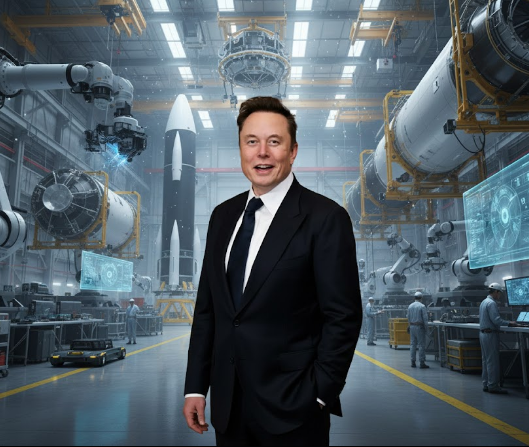
According to Elon Musk, SpaceX is no longer focused on building individual rockets. It is building production lines. And that shift may matter far more than any single launch.
Inside Starbase: The Factory Behind Starship
Rising at Starbase is a massive new structure known as the Gigabay—a roughly $250 million, 700,000-square-foot manufacturing facility designed to assemble Starships at a pace never before attempted in spaceflight.
The initial target: up to 1,000 Starships per year.
But Musk says that number is not the end goal. At full scale, he envisions production reaching 10,000 ships annually—a figure that fundamentally rewrites what space travel can look like.
In aerospace terms, this is not incremental progress. It is a structural break from the past.
When Scale Changes the Equation
At that level of output, everything changes.
- Spaceflight stops being rare. Launches are no longer special events; they become routine operations.
- Launch cadence stops being the bottleneck. With enough vehicles, the limiting factor shifts from hardware availability to logistics and demand.
- Mars stops being theoretical. Large-scale transport of cargo, infrastructure, and eventually people becomes a practical engineering challenge—not a distant dream.
Failure, too, takes on a different meaning. In a mass-production environment, losing a vehicle is no longer catastrophic. It becomes data—part of a rapid iteration cycle.
The Airplane Analogy—and Why It Matters
Airplanes did not change the world simply because humans learned how to fly. They changed it because aircraft were standardized, mass-produced, and continuously improved. That industrialization enabled global travel, international trade, and a deeply interconnected planet.
Starship is aiming for the same inflection point—but beyond Earth.
If spacecraft become products rather than prototypes, space becomes accessible in a way it never has been before. Not just for exploration, but for industry, construction, energy, and long-term settlement.
More Than a Rocket
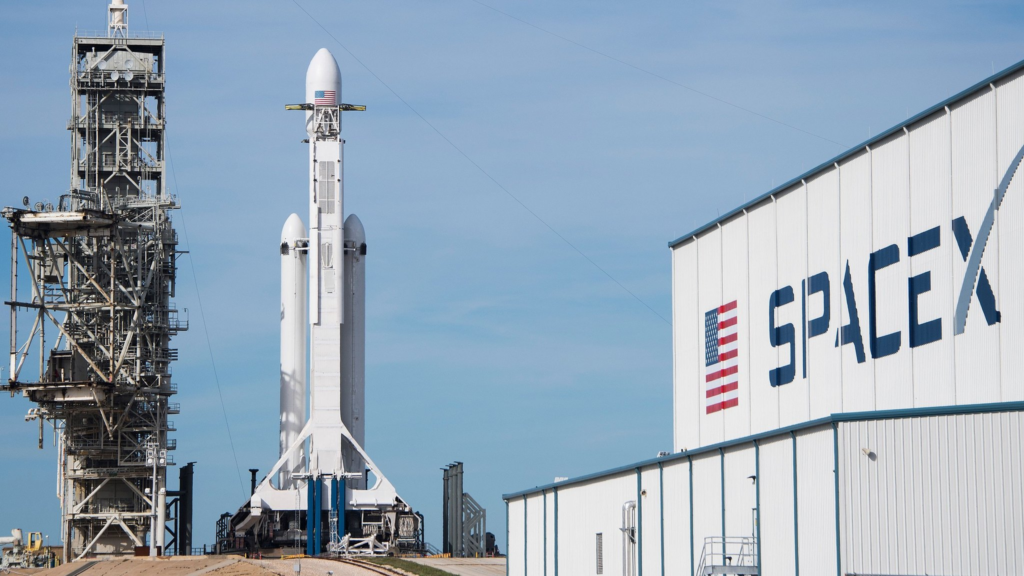
This is not about building the biggest or most powerful rocket ever made—though Starship may well be that.
It is about industrializing access to space.
By focusing on factories instead of one-off missions, SpaceX is betting that scale, speed, and cost reduction—not spectacle—will define the next era of spaceflight.
The real question is no longer whether Starship can fly.
It is whether mass-producing rockets, rather than celebrating individual launches, is the true breakthrough that will open space to humanity.
If Elon Musk is right, the future of space won’t be decided on the launchpad—but on the factory floor. 🚀